
Review Strategy: Your List Is the Asset
Review Strategy: Your List Is the Asset
Let's approach this from another angle: your review strategy has almost nothing to do with reviews. It has everything to do with the list.
Every January, owners make the same resolution — "this is the year I get serious about reviews" — and then do the thing that has never worked: they stare at their Google profile and wait for the universe to deliver five-star proof. Pfui. Reviews don't come from profiles. They come from people you can reach. No list, no reach, no reviews.
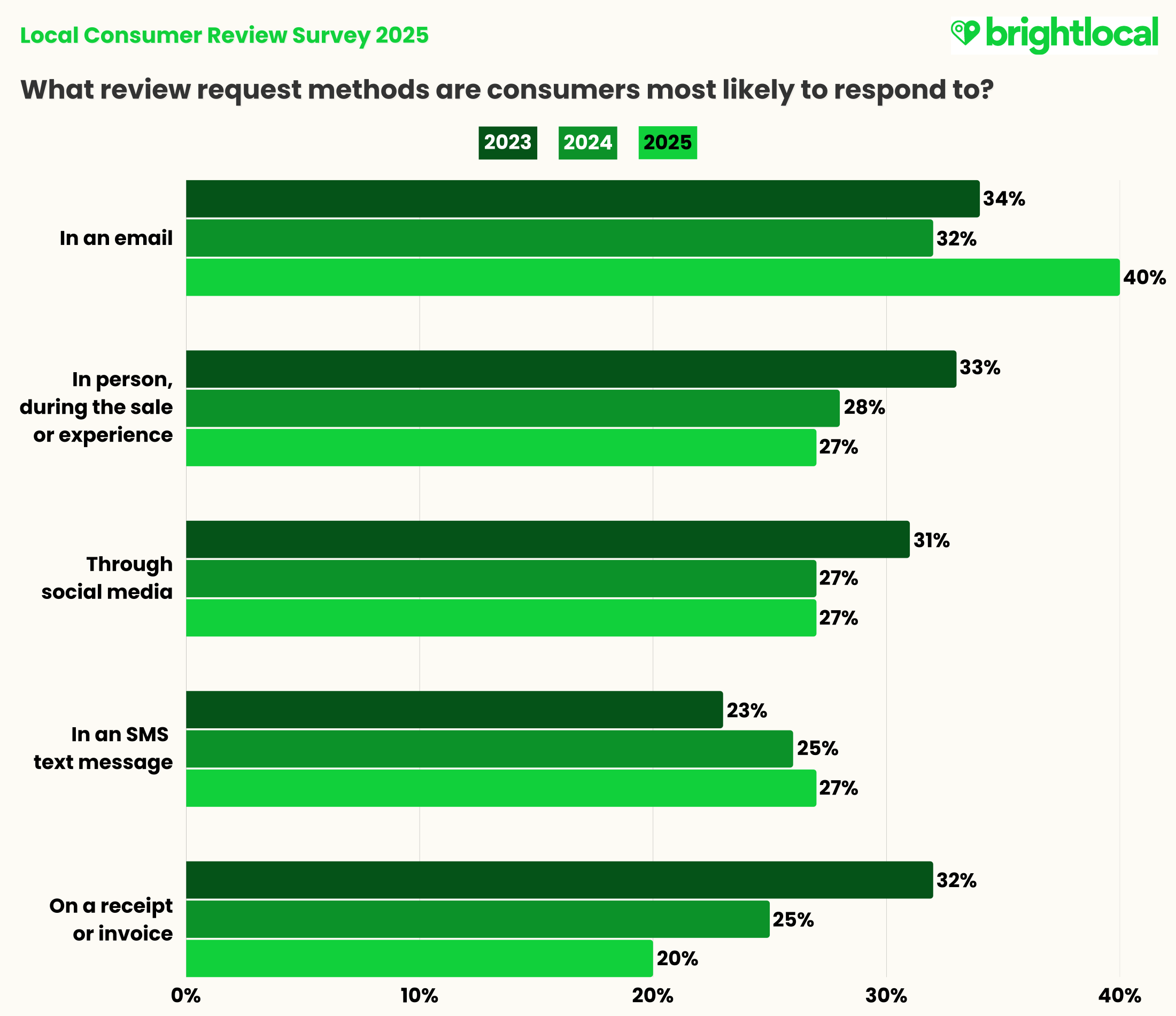
Here's the number that should rearrange your priorities. In BrightLocal's Local Consumer Review Survey 2025 — 1,026 US adults, published January 2025 — 40% of consumers said email is the #1 channel where they'd leave a review if you just asked, up from 32% the year before. And 96% said they're open to writing a business a review at all.
Your customers are not review-hostile. They're review-waiting. The only thing between you and a river of five-star proof is that you never asked — because you had nobody to ask.
What Is a Review Strategy, Really?
A review strategy is a list-building strategy with an ask attached — nothing more, nothing less.
Strip away the jargon: you know who your customer is, you know how to reach them, you ask. Miss step one and the rest is fantasy. The owner with 4,000 past customers in a spreadsheet buries the owner with a fancier website and no list. One has an asset. The other has a hope.
Dan Kennedy's old line applies double here: "All the real wealth is in the herd." The reviewer IS the buyer — already sold, already served, already holding the phone. You don't need to persuade them. You need to reach them.
Why Don't My Customers Leave Reviews?
Because you never asked them where they already say yes.
Owners love telling me their customers "just don't do reviews." Nuts. The data says 96% are open to it. What they don't do is volunteer — volunteerism is for church committees, not marketing. The 2024 edition of the same survey found a growing slice answering "none of the above" when asked how they'd prefer to be asked — survey-speak for you never asked me at all. (BrightLocal Local Consumer Review Survey 2024)
Here's the harsh reality, Professor-style: reviews are the rent; the list is the property. Every review you "earn" on Google's platform is rent on land you don't own. The list — names, emails, phone numbers, permission — is the deed. Tenants beg. Owners collect.
What's the Best Way to Ask for a Review?
Email first, in person second, text rising fast — but the best channel is the one attached to a name you own.
The 2025 numbers: email 40%, in-person ask 27%, with text and phone requests growing after the purchase. Email wins because a busy customer can click through later — no counter pressure. And don't sleep on text: Podium's review guide reports 99% of texts get opened, and cites Mattress Firm seeing a 100% increase in reviews after switching invites to SMS.
The channel is tactics. The list is strategy.

When Should I Ask for the Review?
Fast — faster than you're asking now, almost guaranteed.
BrightLocal's 2025 data puts timing windows on it: 48% of food-and-drink customers expect the request by the next day, 24% the same day. Trades, services, healthcare, and real estate get roughly three days to a week. Notice what's not on the list: "sometime next quarter when I get around to it." The ask has a half-life measured in days — and the owner with a list doesn't have to remember to ask, because the sequence asks for him.
How Do I Start Building the List This Week?
You start ugly, you start Monday, and you never stop:
Rule #1: Collect the contact at every transaction, or the transaction never happened. Marketing-wise, it didn't. Email at checkout, phone number on the intake form. Every customer who leaves unreachable is money you set on fire.
Rule #2: Ask on the channel they'd choose. Email is the workhorse — 40% and climbing. In person for the warm moment. Text for the nudge. Stop arguing about which single channel is "best": the list lets you use all three.
Rule #3: Automate the ask or you'll quit by February. Willpower is not a system. Day-zero thank-you, day-two text, day-seven nudge — set it once, let it run. Systems over people. That's the difference between a review profile that compounds and one that flatlines.
For the sequencing details: How Often Should You Ask for Reviews? The Survey Data covers the cadence, How to Ask for Reviews Without Feeling Like a Beggar gives you the words, and NFC Tap Cards vs QR Codes: Which Collects More Reviews? covers the counter-top hardware.
You have two businesses: the one that transacts, and the one that remembers who it transacted with. The first rents its reputation from Google. The second owns it. Which one are you building?
— Jack
By the way... do you have a plan for collecting reviews in your business? Don't let it intimidate ya. Go to ReputationGenius for the plan and the tools to make it easy and reliable — for you and your team. Click here.
P.S. Count your reachable past customers — real names with real emails or phone numbers. Under 500? This week's review strategy isn't "get reviews." It's "build the list."
